Man Utd 3-2 Roma: Roma did not have a shot after half-time
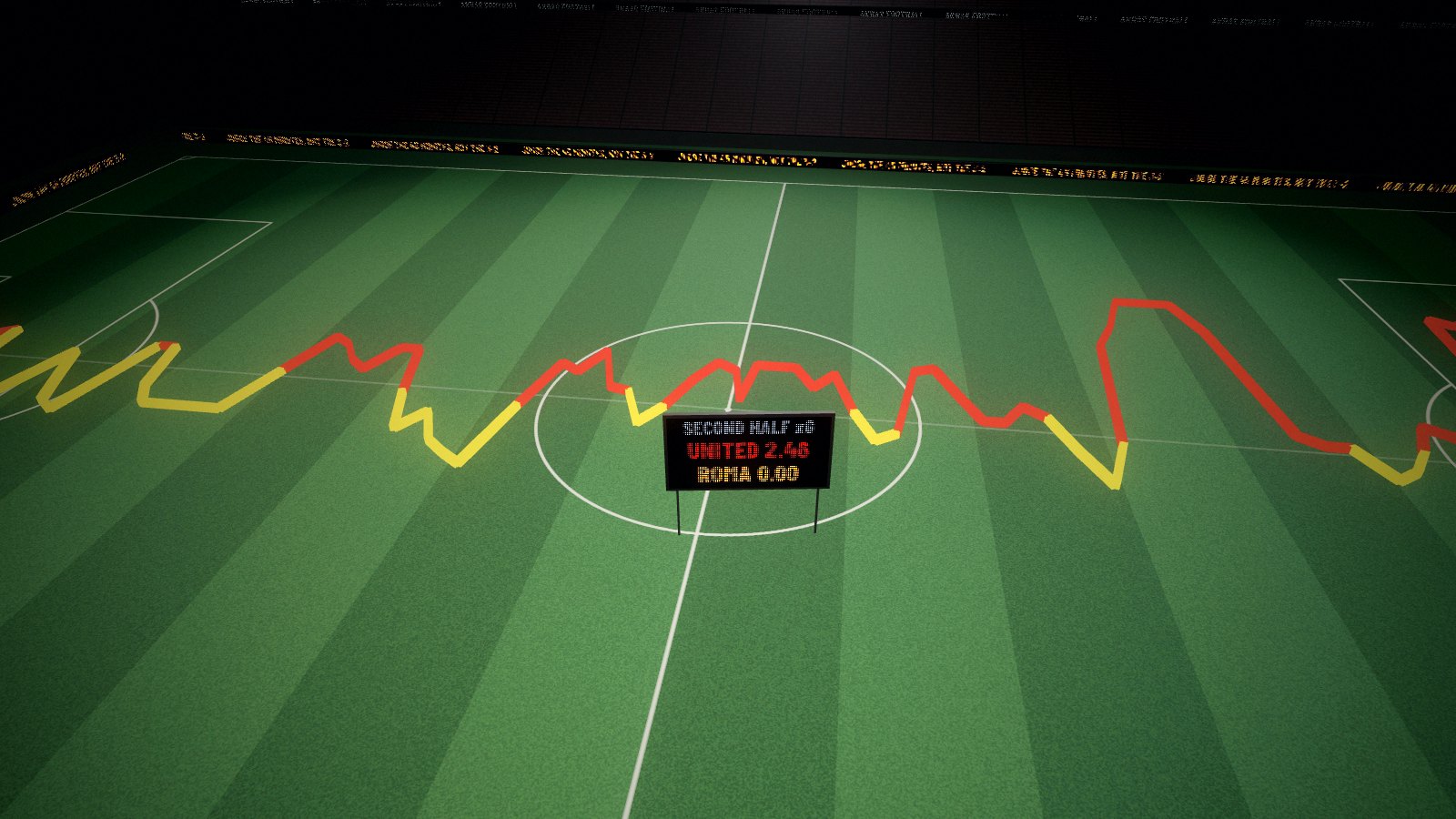
Manchester United were 2-0 down to Roma after 18 minutes at Old Trafford on Tuesday night, nine games without a win. They won 3-2.
Comebacks get explained by belief, the crowd and a bit of luck. The data says something more useful: after half-time, Roma did not have a single shot.
The 2-0 was fair
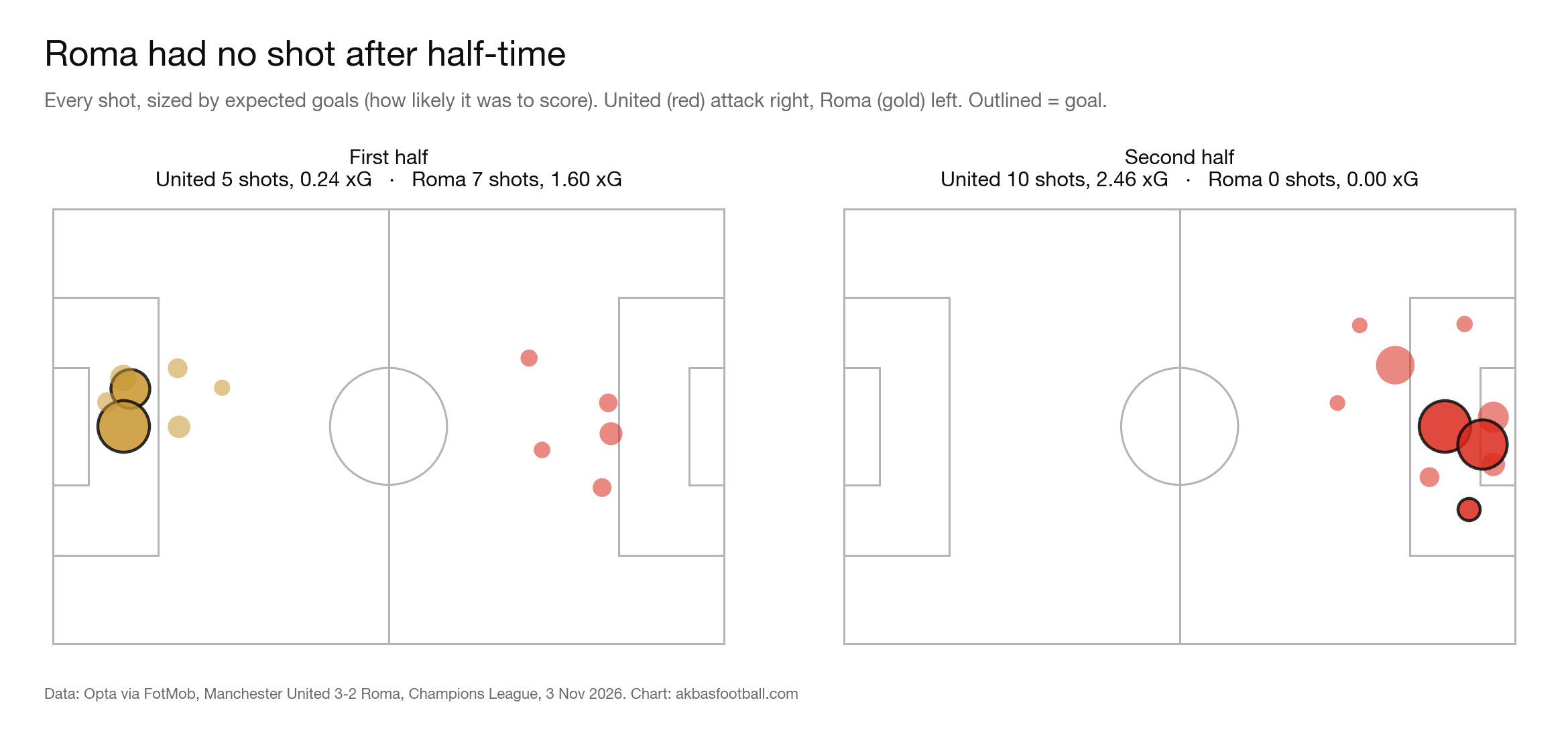
In the first half Roma had seven shots worth 1.60 expected goals (xG, Opta's measure of how likely each shot was to go in, from where and how it was taken). United had five shots worth 0.24. Matías Soulé scored after 11 minutes, Donyell Malen after 18, and Soulé hit the post just before the break. On the chances, Roma deserved their lead.
After half-time, Roma did not have a shot
In the second half United had ten shots worth 2.46 expected goals. Roma had none, not even a blocked one.
It was not that Roma never had the ball. They had 49% of possession in the second half. But in the first half they touched the ball eight times in United's penalty area, and in the second half not once.
Over the whole game United created 2.70 expected goals to Roma's 1.60. In one half, United created more than Roma did all night.
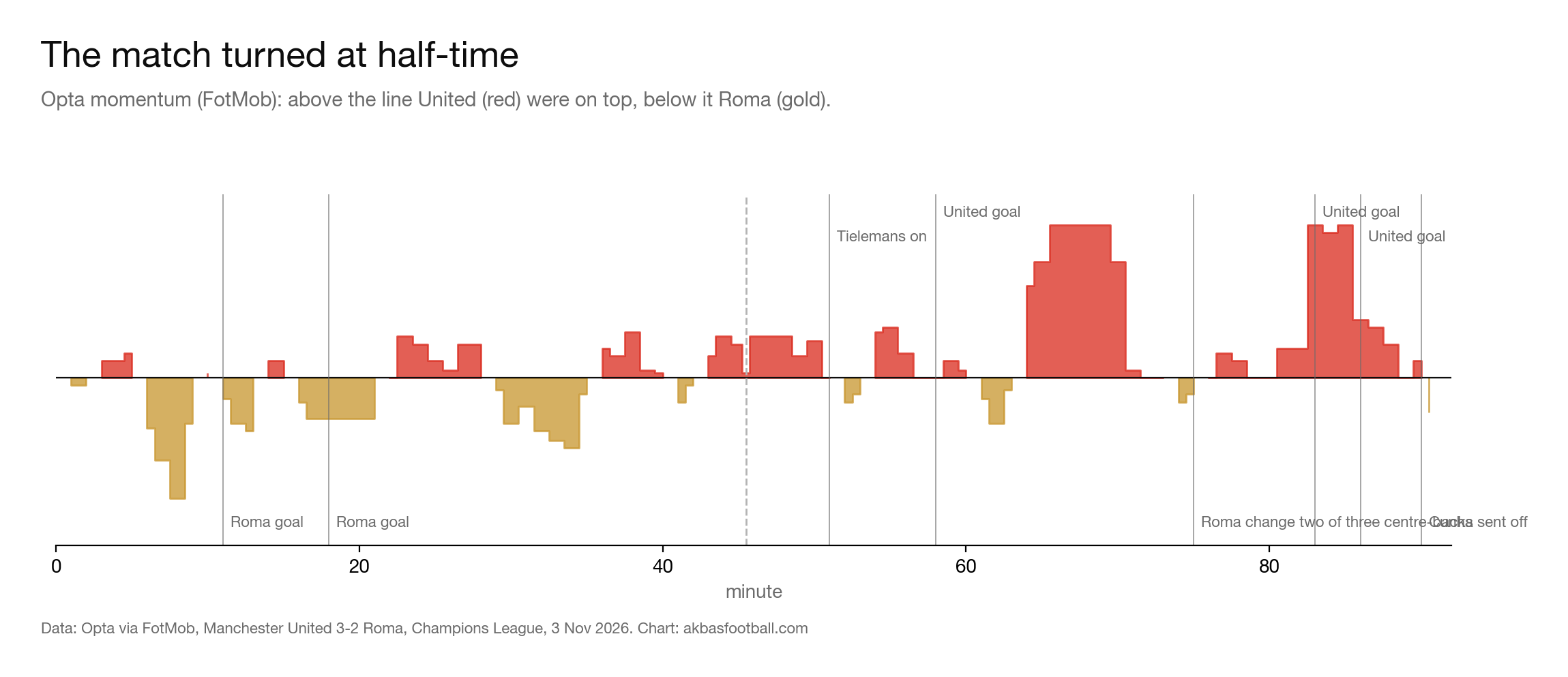
Opta's momentum line, which tracks which side is on top minute by minute, shows the same turn. Roma were on top for most of the first half. United were on top for nearly two thirds of the second.
What changed
Two decisions line up with the turn. Six minutes after the break, United brought on Youri Tielemans for Carlos Baleba in midfield. Seven minutes later Bruno Fernandes scored, and a minute after that Bryan Mbeumo hit the post. From that goal, United had six shots in ten minutes.
Then, with 15 minutes left and still 2-1 up, Roma changed two of their three centre-backs: Gianluca Mancini and Mario Hermoso off, Daniele Ghilardi and Evan N'Dicka on. Eight minutes later Matheus Cunha equalised. Three minutes after that he scored again. He was booked a minute later and sent off for a second yellow card in stoppage time.
The data cannot prove that either change caused a goal. But unless one of them was injured, replacing two of a back three at once while defending a lead is a decision Roma's staff will be asked about: two new centre-backs, with no time to settle, against a side that was already on top.
Does this save the manager?
Before kick-off the question at United was whether Michael Carrick would survive the week. Earlier this week I checked every mid-season Premier League sacking since 2010, and the lesson from that study applies here: judge the chances, not the result.
On the chances, this was not a lucky 3-2. Going from 0.24 expected goals in the first half to 2.46 in the second, while the opponent goes from 1.60 to zero, is a team doing something different.
But one half does not fix a season. United are still 17th in the Premier League, and after nine league games only five teams had given away more expected goals.
As a sporting director, what I would watch now is simple: does the second-half team start the next game? If it does, and the chances hold, the comeback was the start of a plan. If it does not, it was a reaction.
How I measured it
Shots, expected goals, possession, touches in the box and the momentum line are Opta data from FotMob's match centre for Manchester United 3-2 Roma, Champions League, 3 November 2026. Expected goals add up the scoring chance of every shot, so they measure the quality of the chances a team creates rather than the score. Substitutions and cards are from the same match events.