17 shots, none on target: how Arsenal shut Liverpool out at Anfield
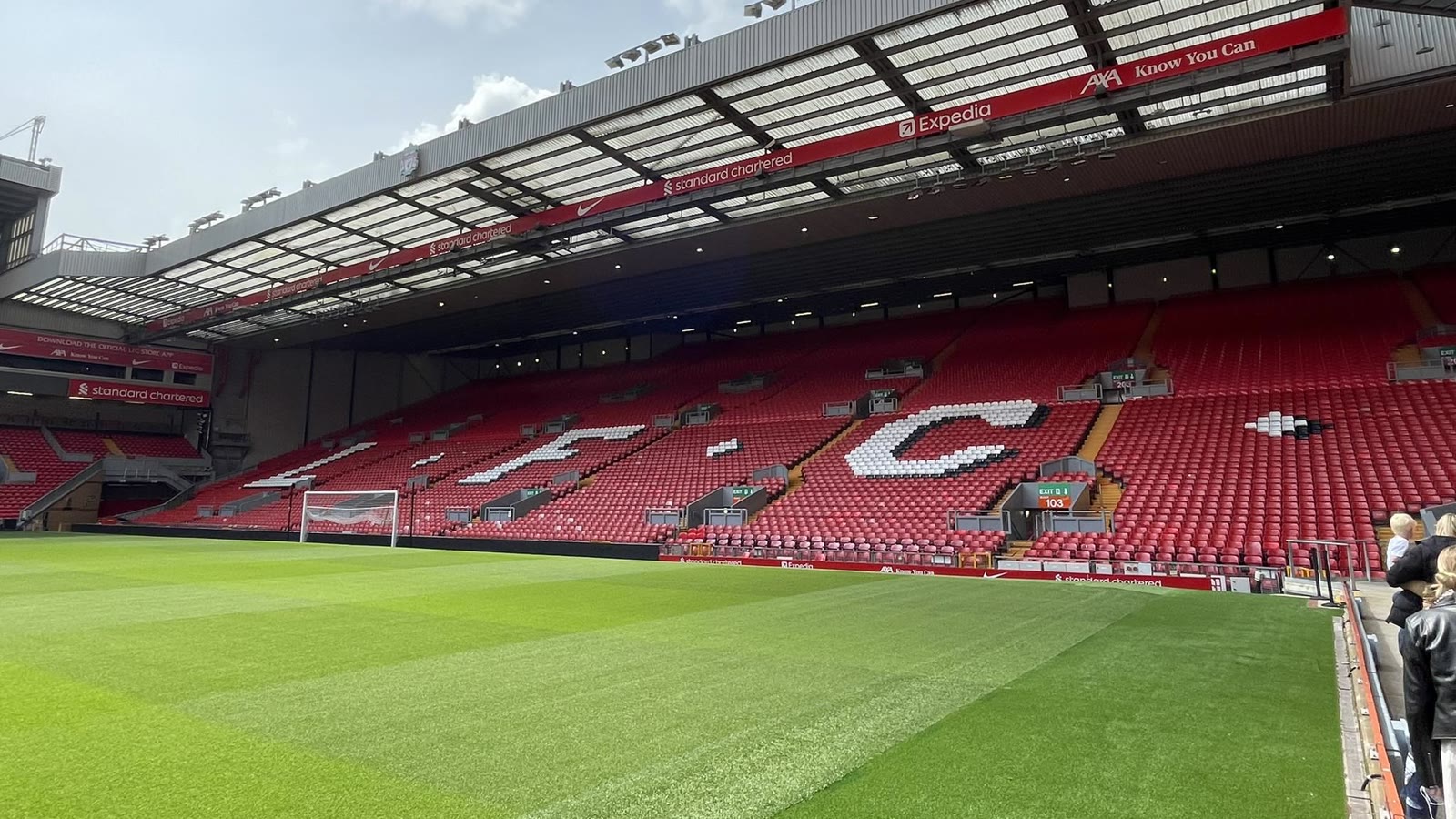
Arsenal won 1-0 at Anfield on Sunday. Kai Havertz scored after 16 minutes, and Arsenal went three points clear at the top of the Premier League.
The number everyone shared afterwards was 0.00 xGOT. Liverpool had 17 shots and not one of them hit the target. Arsenal's goalkeeper, David Raya, did not have to make a save. It was the first time on record that Liverpool failed to put a shot on target in a home league game.
A number like that is easy to share and easy to misread. It sounds like Liverpool created nothing. The data says something more interesting: Liverpool got into the box, created about as much as Arsenal did, and still had nothing land on the goal, because Arsenal had a player in front of almost every shot. I went through all 17 to see how.
What 0.00 xGOT means
xG (expected goals) rates every shot by how likely it was to score, based on thousands of similar shots: where it was taken from, the angle, whether it was a header, and so on. A shot worth 0.10 xG goes in about one time in ten.
xGOT (expected goals on target) only counts shots that are on target, and rates them by where they were going: a shot into the top corner scores higher than one straight at the goalkeeper. If a team has no shots on target, its xGOT is zero, whatever else happened.
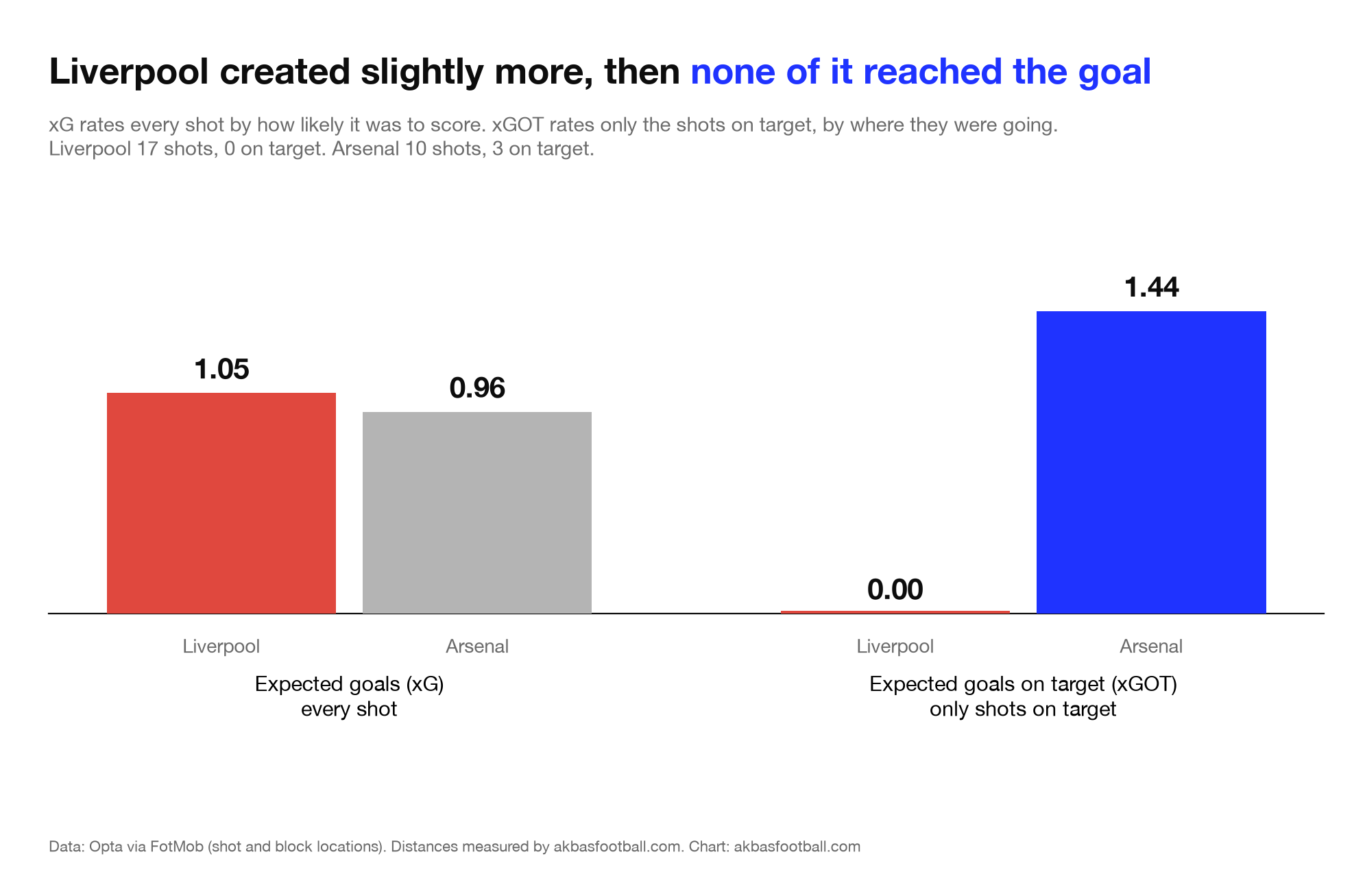
So the two numbers tell different stories. By xG, Liverpool's 17 shots were worth 1.05 goals and Arsenal's 10 shots were worth 0.96. On paper Liverpool created slightly more. By xGOT it was 0.00 against 1.44, because Arsenal put three shots on target and Liverpool put none.
It was not a lack of the ball
Liverpool had 56% of the ball and 52 touches in Arsenal's penalty area. Arsenal had 24 in Liverpool's. Fourteen of Liverpool's 17 shots came from inside the box.
This was not a team kept away from goal. It was a team that got where it wanted to be and could not get a shot through.
Where every shot went
Of the 17 shots, 9 hit an Arsenal player, 7 went wide or over, and 1 hit the crossbar: Florian Wirtz's free kick in the 39th minute, which Opta logs reaching the goal line 2.48 metres up, at the height of the bar (2.44 metres).
The blocks are the story. Opta records where each shot was taken and where it was blocked, so you can measure the gap between the two. I did that for all nine.
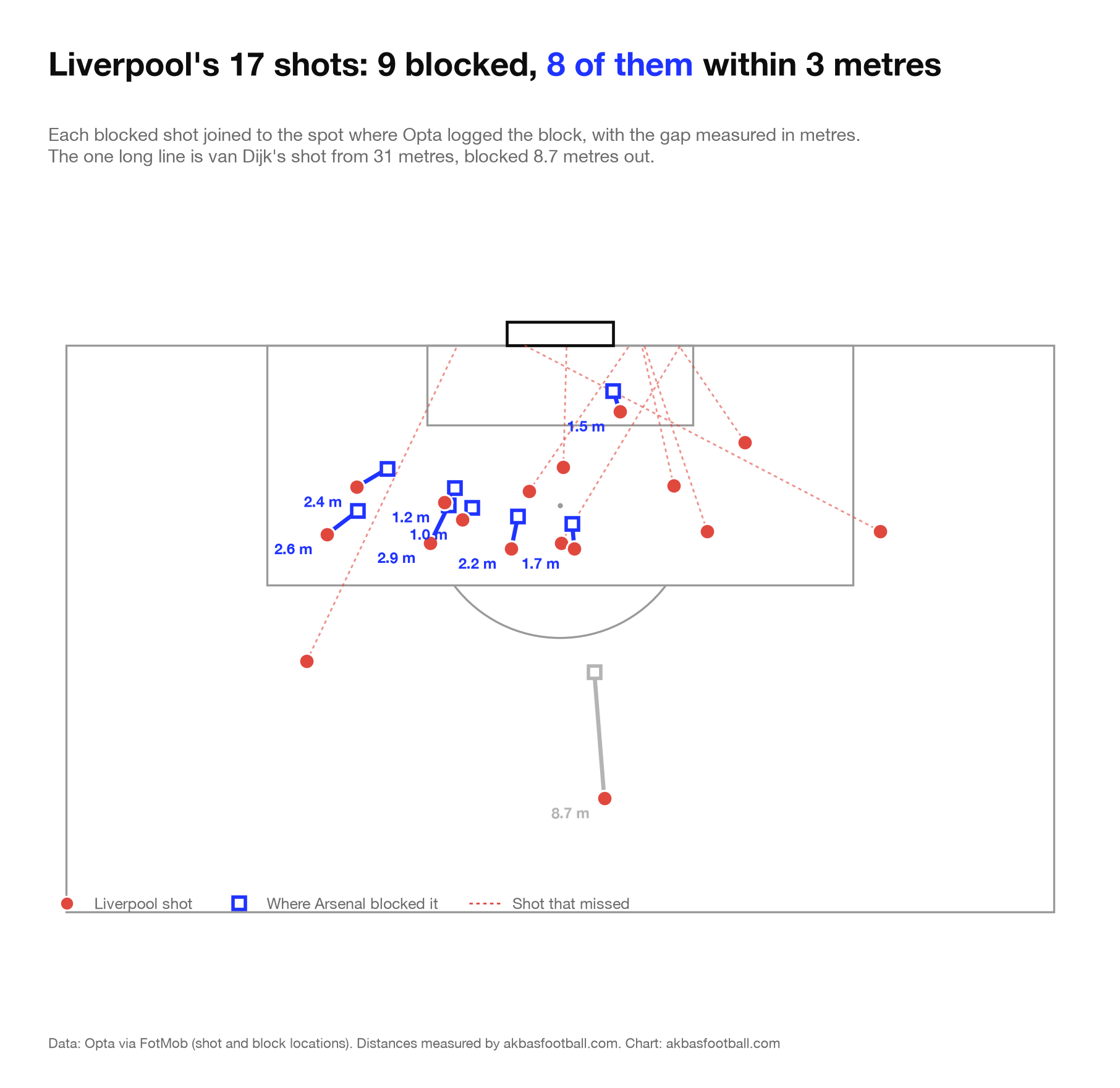
Eight of the nine blocks came within three metres of the shooter: 1.0, 1.2, 1.5, 1.7, 2.2, 2.4, 2.6 and 2.9 metres. The only exception was Virgil van Dijk's shot from 31 metres, blocked 8.7 metres out. In other words, when a Liverpool player shot inside the box, an Arsenal player was already close enough to touch him.
The blocks also took away the best chances. Liverpool's two highest-quality shots of the game were Wirtz in the 66th minute and Ronald Araújo in the 77th, each worth about 0.18 xG, roughly a one-in-six chance. Both were blocked inside the box, from 2.2 and 1.5 metres.
Most of the rest were poor chances to begin with. Liverpool's 1.05 xG came from 17 shots, an average of 0.06 per shot. That is about one goal for every 16 shots like them. Opta counted one big chance (a chance a player would be expected to score) for Liverpool all game.
Every shot came at 0-1
The timing matters. Arsenal scored in the 16th minute and Liverpool did not take their first shot until the 27th. Every one of their 17 shots came with Arsenal ahead.
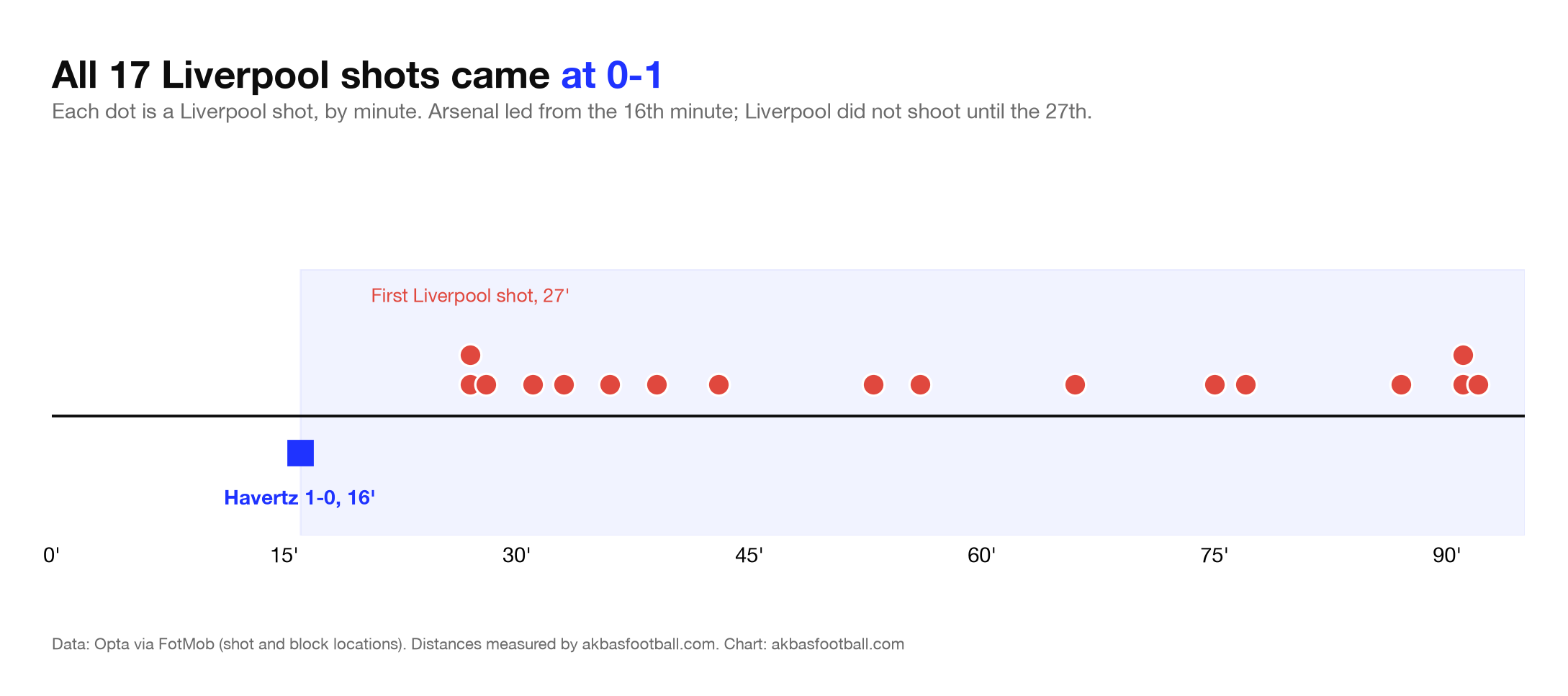
A team protecting a lead can drop deeper and fill its own box, which is exactly where the blocks happened. That is not a criticism of Arsenal. Under Mikel Arteta they have won 81% of the Premier League games in which they scored first (137 of 169, according to TNT Sports). Getting bodies between the ball and the goal is a big part of how a one-goal lead holds.
Arsenal needed very little at the other end. The goal came from a loose pass out from the back by Alisson, won back, then one Declan Rice ball across the box for Havertz to finish from about three and a half metres. That one chance was worth 0.64 xG, almost two in three. Liverpool's best chance all game was worth 0.18.
It is not new
This was the second league meeting in a row in which Liverpool did not hit the target. In January, at the Emirates, under Arne Slot, the game finished 0-0 and Liverpool had 8 shots, none on target.
But they failed in a different way.
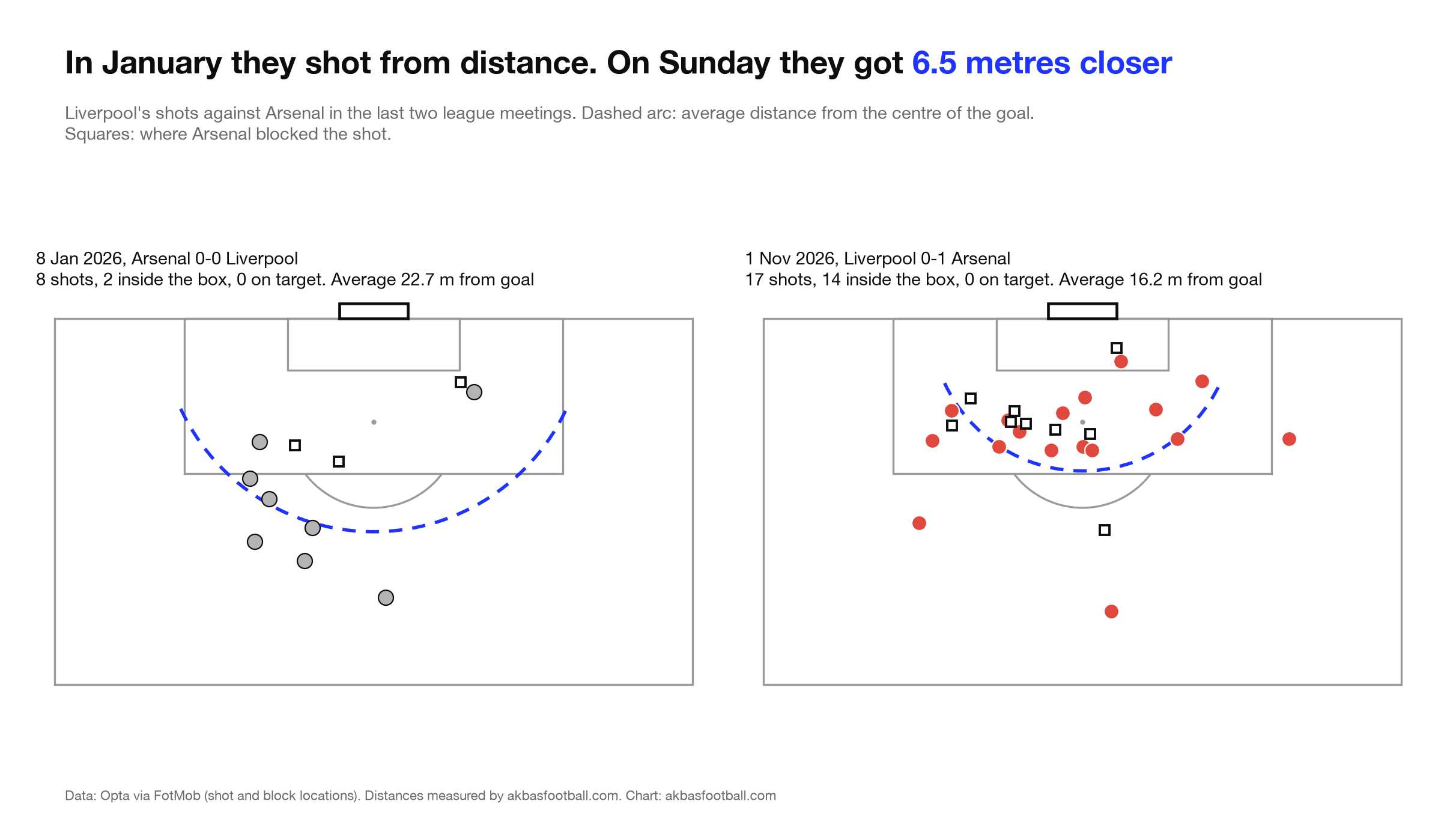
In January six of Liverpool's eight shots came from outside the box, on average 22.7 metres from the centre of the goal. On Sunday, under Andoni Iraola, fourteen of seventeen came from inside the box, on average 16.2 metres out. Liverpool got 6.5 metres closer. Arsenal's players were still in the way.
That is the useful part of the comparison. Two different Liverpool managers, two different approaches, the same zero. The constant is the defence they were playing against.
What this says about Arsenal
Arsenal do not stop teams shooting. Liverpool had 17 shots. What Arsenal stop is a shot with nobody in front of it.
That is a coaching achievement first: a structure that keeps players inside the box and close to the ball when it matters. But it also shapes recruitment. A team that defends like this needs centre-backs who are at their best inside their own box, and midfielders who get back into it rather than holding a line further out. Sunday was Arsenal's ninth clean sheet of the season in all competitions.
What this says about Liverpool
For Liverpool's staff, the lesson is that more shots will not fix this. Seventeen shots, 52 touches in the box and slightly more xG than Arsenal still produced nothing on target.
Against a team that fills its box, the shots that work are the ones taken before the bodies arrive: a quicker final pass, a cut-back to someone arriving late, or a set piece. Set pieces are an obvious gap: Sports Mole reports that Liverpool are joint bottom of the league for set-piece goals this season, without a single one.
My verdict
The 0.00 is not a story about bad finishing. It is a story about where Arsenal's players were when Liverpool shot. Eight of nine blocks within three metres of the shooter, two managers, two different ways of attacking, and the same result.
Arsenal don't stop you shooting. They make sure nobody shoots alone.
How I measured it
All shot data is Opta's, taken from FotMob's match pages for Liverpool 0-1 Arsenal (1 November 2026) and Arsenal 0-0 Liverpool (8 January 2026). For each shot Opta records where it was taken and, for blocked shots, where the block happened, on a 105 by 68 metre pitch. The block distance is the straight line between the two. The average shot distance is measured to the centre of the goal. Block positions are logged by hand by Opta's analysts, so treat each distance as accurate to about a metre.