Man Utd 4-4 Aston Villa: United's whole goal difference comes from dead balls
Manchester United had 26 shots against Aston Villa at Old Trafford on Sunday. Villa had 12. United's chances were worth 3.55 expected goals to Villa's 2.88 (expected goals, or xG, is Opta's measure of how likely each shot was to go in, from where and how it was taken). United still needed two goals in stoppage time, from Joshua Zirkzee and Patrick Dorgu, to draw 4-4.
The easy reading is finishing, or bad luck. I went through all 100 Premier League games played this season to check. The gap is somewhere else.
Open play is level
Opta records how the move behind every goal started: open play, a counter-attack, a corner, a free kick, a throw-in routine or a penalty. I split United's goals the same way.
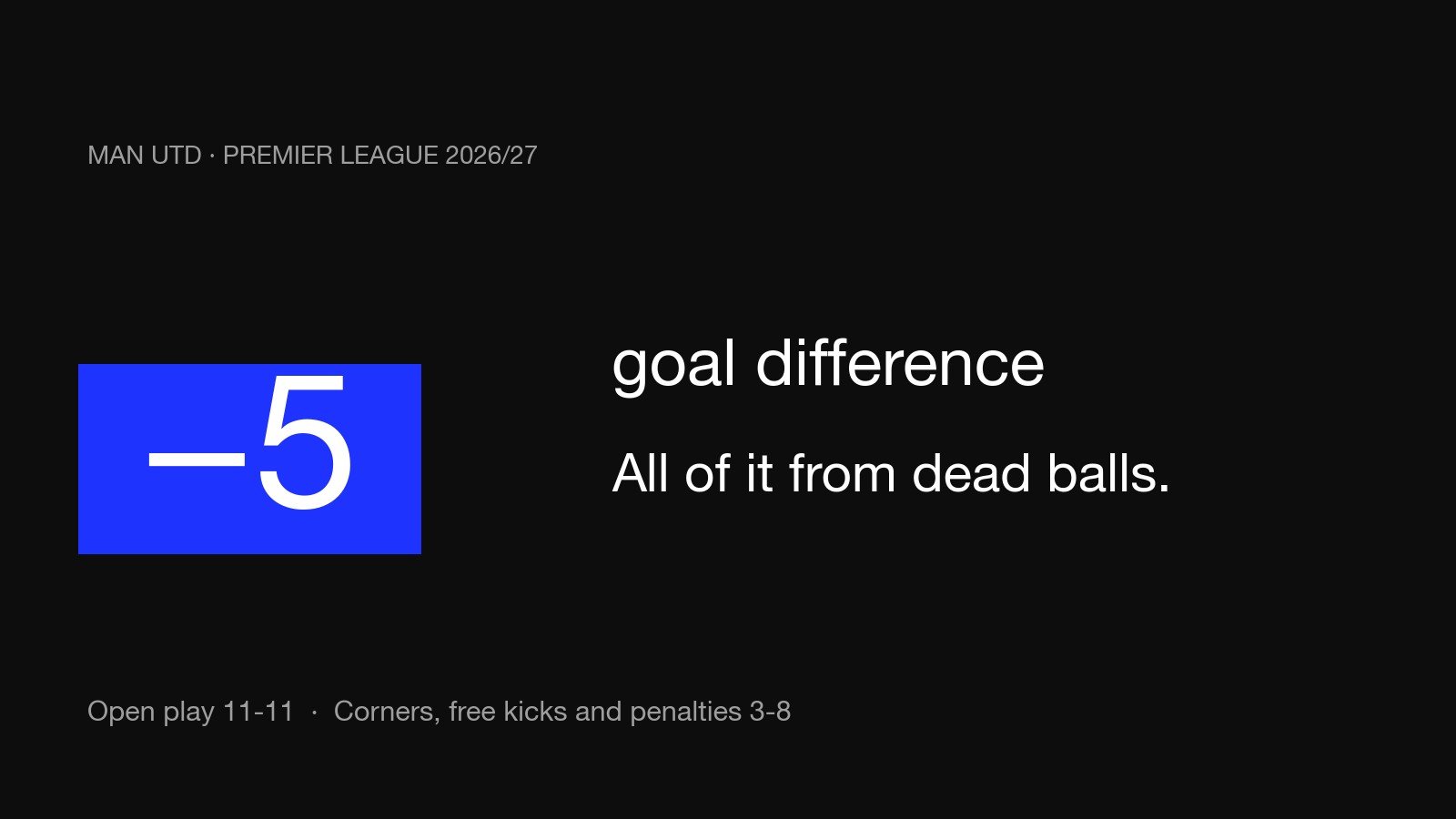
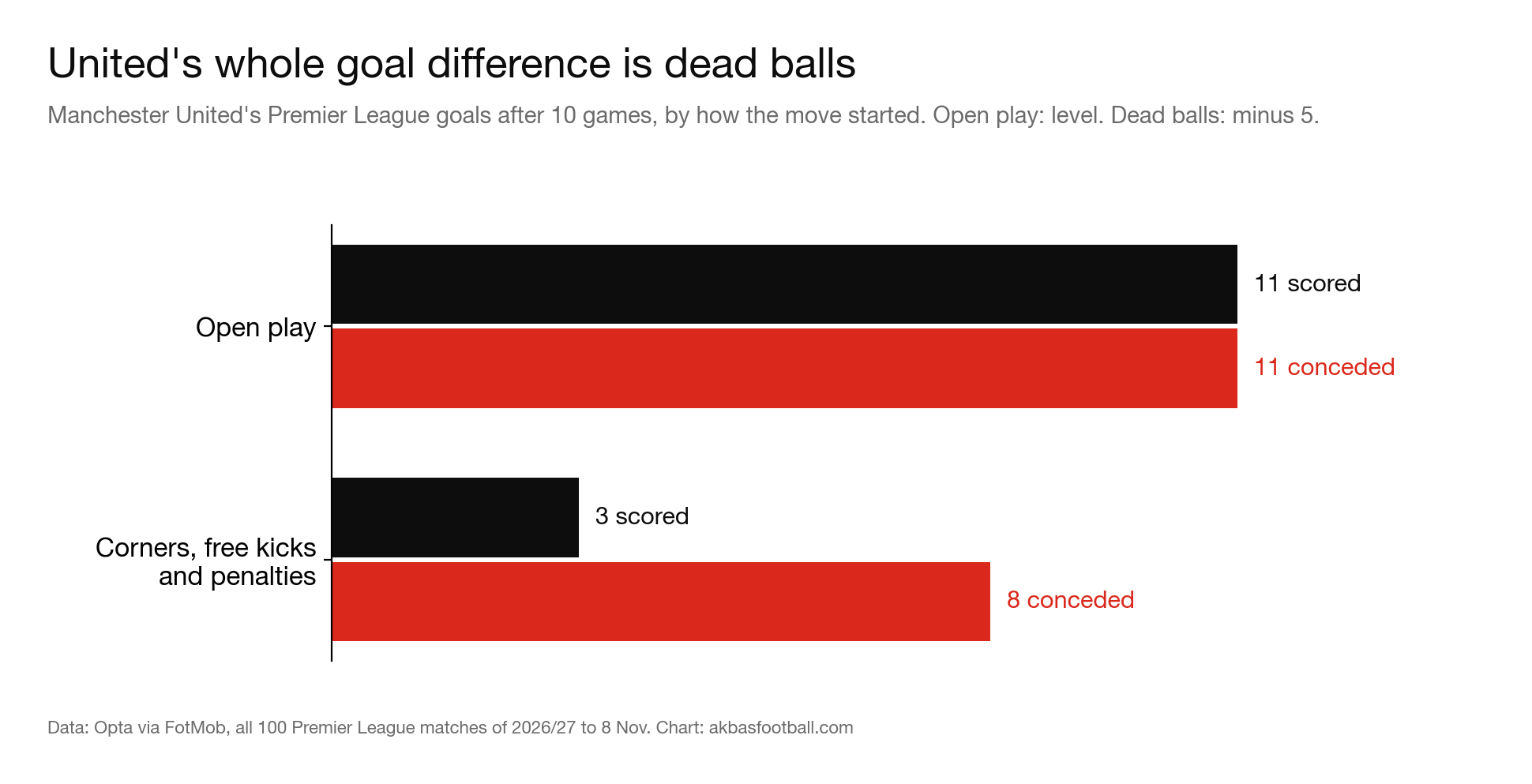
From open play, United have scored 11 and conceded 11. From corners, free kicks and penalties, they have scored 3 and conceded 8. After 10 games their goal difference is minus 5 (14 scored, 19 conceded), and all of it comes from dead balls.
The worst dead-ball record in the league
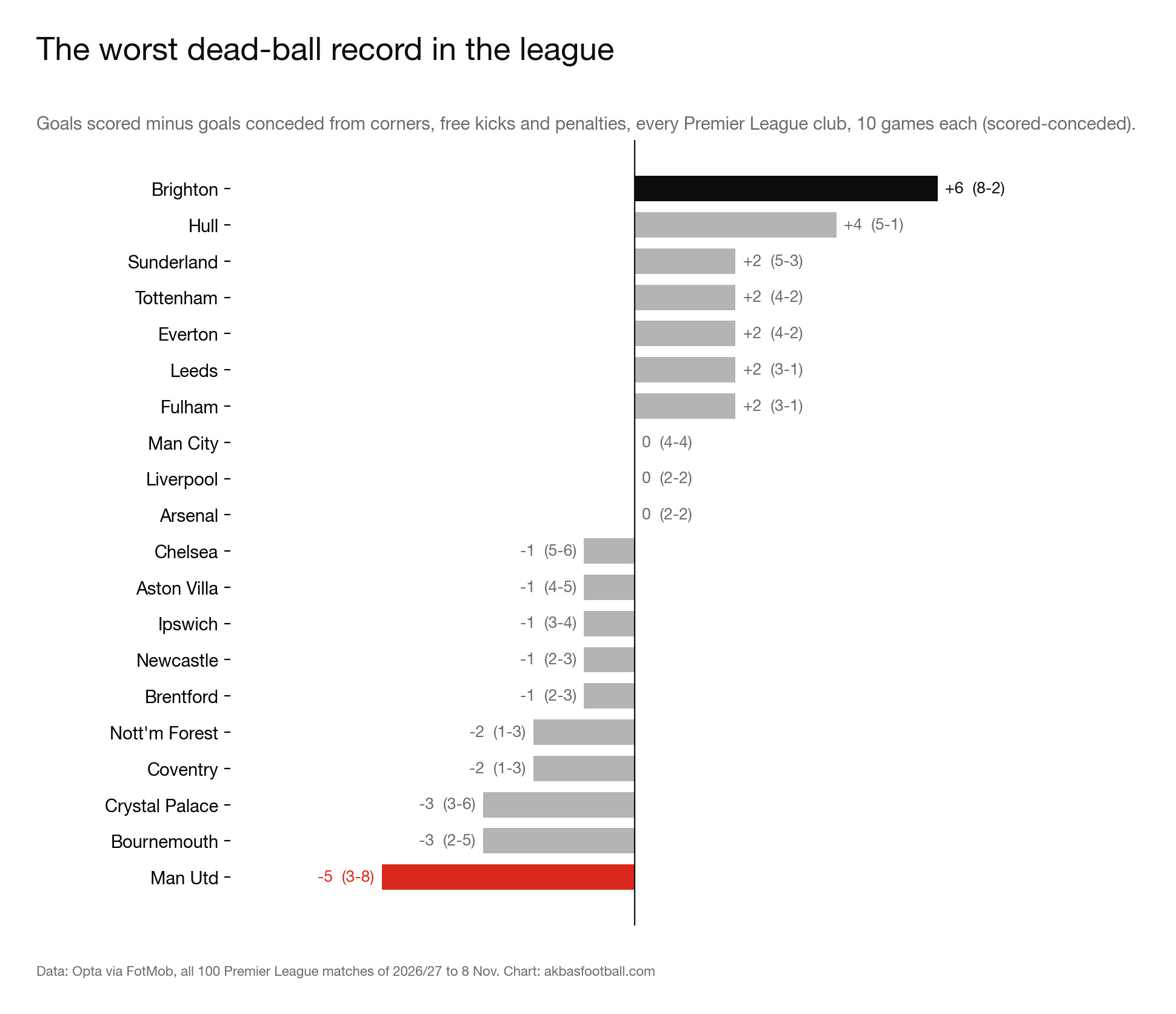
No team has conceded more goals from corners, free kicks and penalties than United's 8. Chelsea and Crystal Palace are next on 6. The average team has conceded 3.3. Put both ends together and United's dead-ball goal difference of minus 5 is the worst in the division.
At the other end, Brighton are second in the table and plus 6 on the same measure: 8 scored, 2 conceded. That is an 11-goal swing between two clubs in 10 games, from the part of the game that a coaching staff can rehearse every week.
Penalties are not really a set-piece routine, so I checked without them. United have scored 1 and conceded 6 from corners and free kicks alone, level with Crystal Palace for the most conceded. The picture does not change.
The same goal, twice
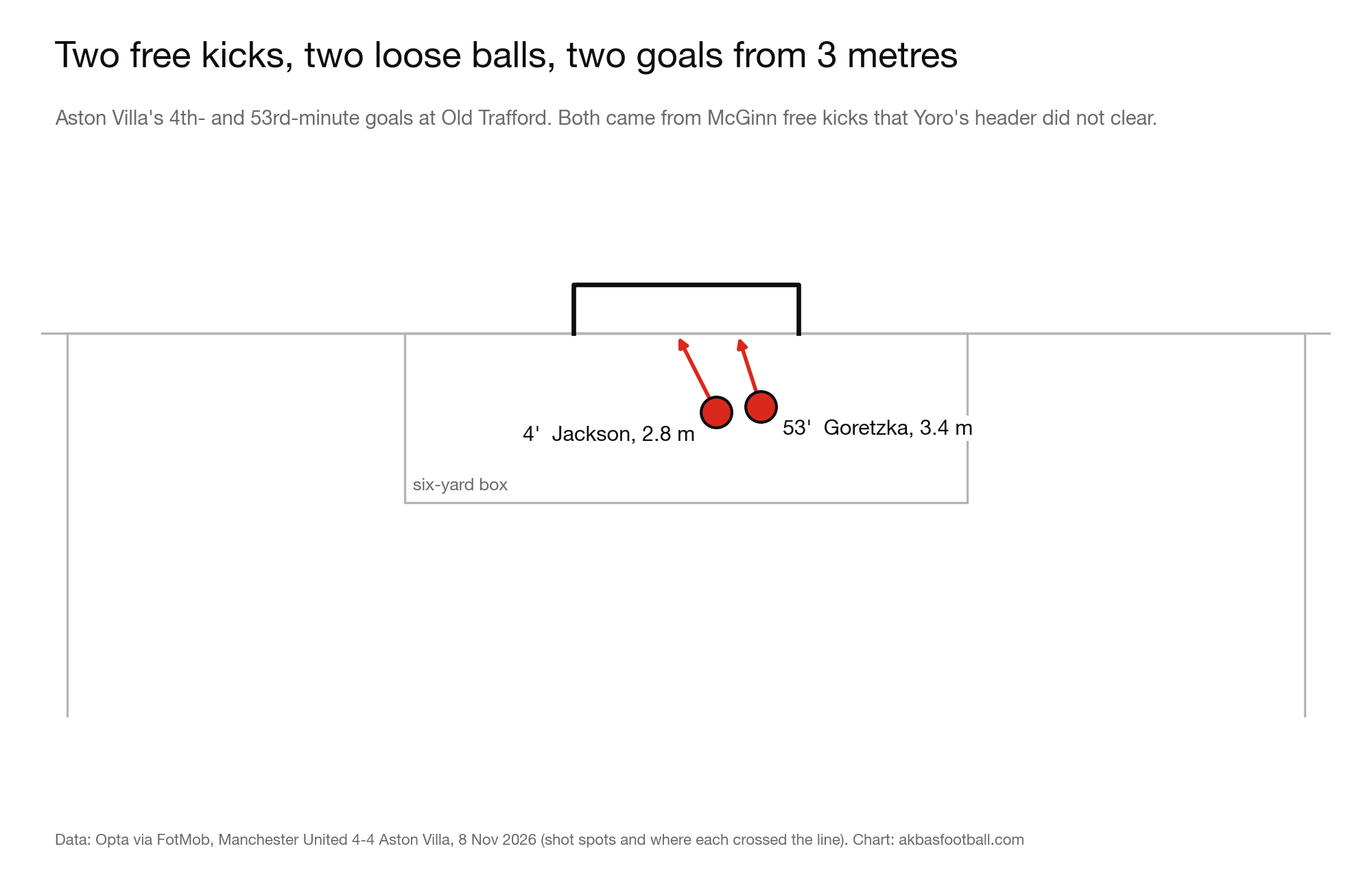
Against Villa it happened twice. In the fourth minute John McGinn put a free kick into the box, Leny Yoro's header did not clear it, Senne Lammens parried Alysson's shot and Nicolas Jackson scored the rebound. In the 53rd minute McGinn's free kick went to the back post, Yoro headed it against his own crossbar, and after a scramble Leon Goretzka scored.
Opta puts the two shots 2.8 and 3.4 metres from goal. Both were inside the six-yard box. Villa's other goals were a penalty and an early strike from open play, so three of the four came from dead balls.
Not the first ball, the second one
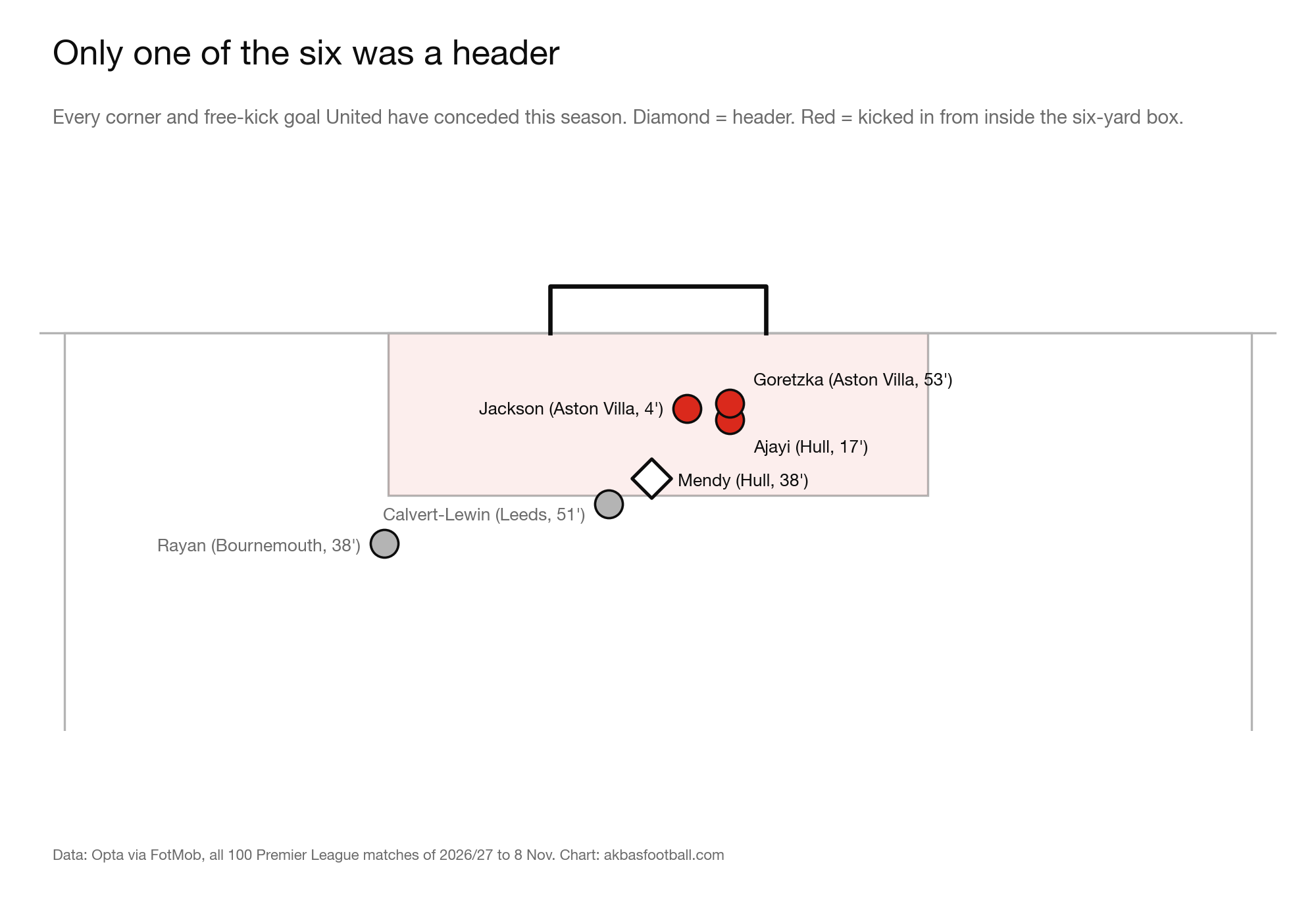
Across the season, United have conceded 6 goals from corners and free kicks. Only one was a header, Nobel Mendy's for Hull. The other five were shots with the feet, and three of them came from inside the six-yard box: Semi Ajayi for Hull, then Jackson and Goretzka for Villa.
A goal kicked in from three metres after a set piece is rarely the first contact. It usually follows a knock-down, a block, or a header that did not go far enough. That is what the Villa goals were. United are getting to the first ball. Nobody owns what happens after it.
What I would do as sporting director
This is not a problem that needs a transfer fee. It needs an owner, a clear brief, and one more line in the scouting report.
1. Ownership. One coach is accountable for dead balls, and his name sits next to that minus 5 in the weekly first-team review, like any other number at the club. In May, reports said United planned to add a set-piece specialist to Michael Carrick's staff. Whoever holds the job, the number needs a name next to it.
2. A clear brief. Defending a set piece does not end at the first header. It ends when the ball is out of the box. In training and in matches, two players have one job: the second ball.
3. Recruitment. Every centre-back United scout in January is also judged on what happens in his own six-yard box after a cross, not only on how many headers he wins.
Ten games is a small sample, and set-piece numbers swing more than most. But 8 conceded in 10 games is more than twice the league average, and the Villa goals show the same pattern as the season. United do not have a problem creating chances in open play. They have a dead-ball problem, and it is the cheapest problem in football to fix.
How I measured it
Every goal, shot location and situation is Opta data from FotMob's match centre, for all 100 Premier League matches of 2026/27 played up to 8 November. I counted Opta's corner, free-kick and penalty situations as dead balls, including moves that started from a free kick. Throw-in routines count as open play; United have scored and conceded none that way. Own goals are counted for the team that benefited, one in each direction for United. Distances run from the shot spot to the centre of the goal. The descriptions of the two Villa goals come from Opta's live commentary and the match reports.